
A signature is much more than just a name written on paper. It is a personal and unique mark that shows you agree to a contract, a bank check, or a legal document. Because signatures carry so much power, they are often targeted by people trying to commit fraud for personal gain.
When someone doubts the authenticity of a signature, signature verification helps detect the alleged fraud. This method helps determine if a mark is genuine or a clever fake by using specialized tools and expert knowledge.
Why Does Signature Authentication Matter?
In our modern world, signatures define many crucial decisions. They are used to buy property, start businesses, and even give away assets in a will. If a fraudster successfully copies your handwriting, they could steal your money or your legal identity.
Checking the authenticity of a signature is a key part of staying safe. This type of forensic testing is used to:
- Stop criminals from using fake bank checks or credit card slips.
- Solve big arguments over who owns a house, a business, or a property deed.
- Make sure government IDs and passports are real and not counterfeit.
- Provide proof for the police when they investigate identity theft or forgery.
- Protect companies from being forced into fake business deals or shady employment agreements.
Without a proper check, individuals or companies could face serious financial losses or long legal battles.
How Forensic Experts Examine Handwriting
Forensic document examiners do not just look at the general shape of the letters. They follow a very strict scientific process to make sure their findings are accurate and fair. They use specialized tools to see things that a normal person would miss.
Step 1 – Gathering the Right Samples
To start a test, the expert needs two different sets of signatures to compare:
- The Questioned Signature: This is the single signature that is being doubted. It might be on a will, a check, or a business contract.
- Known Specimens: These are 10 to 20 real signatures that the person signed in the past. These can come from old letters, bank cards, or signed forms.
The more “known” samples you can provide, the easier it is for the expert to see the person’s natural writing habits. These habits are repetitive and very hard for a forger to hide.
Step 2 – Analyzing Hidden Details
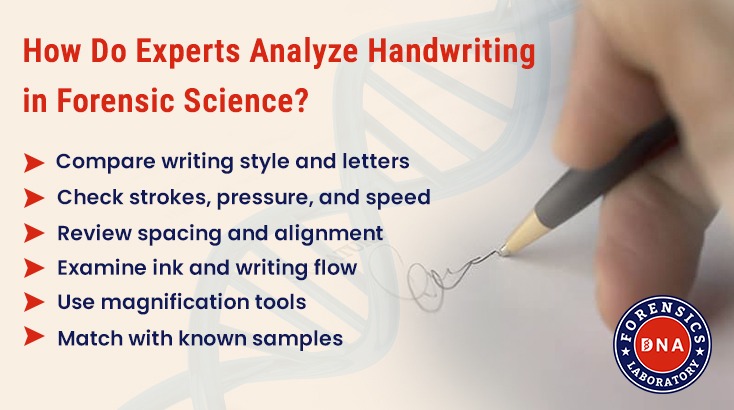
Once they have the samples, the experts use tools like magnifiers and microscopes to look for tiny clues. They look at the “hidden meanings” behind the handwriting.
- Letter Shapes and Sizes: Every person has a unique style of forming letters like “a,” “o,” or “t.” Experts examine the height and width of these characters to find similarities or differences.
- Slant and Angle: Most people write with a specific tilt or angle. This slant is a consistent pattern that is almost impossible for a forger to copy perfectly.
- Spacing Between Words: Experts measure the distance between letters and the space between words. This unique spacing is a signature’s personal code.
Hidden Signs of a Forged Signature
Forging a signature is much harder than it looks. A forged signature may resemble the original one, but still, it still has the hidden signs that differentiate it from an original signature.
When a person tries to copy someone else’s handwriting, they often leave behind “red flags” that forensic experts can easily catch during examination. Such methods are:
- Pen Pressure: A real signature has areas where the writer presses hard on some strokes and goes light on others. Forgers often have shaky or heavy pressure because they are trying too hard to copy the name.
- Flow and Speed: A real signature is usually written quickly and smoothly with confidence. A forgery might look slow, hesitant, or shaky.
- Pen Lifts and Ink Blobs: If a forger stops to check their work while they are copying it, they might lift their pen in odd spots. This creates an unnatural ink pattern and an inconsistent flow from the beginning to the end.
Sectors That Use Signature Authentication Services
Many different businesses and groups use these forensic tests to prevent business and financial loss. It is a vital tool for maintaining trust in professional and legal relationships.
- Banking & Finance: Banks heavily rely on signature validation to process checks and identify suspicious activity.
- Legal Disputes: Courts use these tests to settle family fights over inheritance, wills, and property deeds.
- Insurance: Companies use forensic analysis to detect when someone is making a fake claim using forged papers.
- Government: Verification is used to check that personal identity documents, like IDs, are real and not forged.
- Business & Employment: Owners use these services to detect unauthorized business deals or fake employment details.
DNA Forensics Laboratory – Your Trustworthy Partner for Signature Verification
If you are in a situation where a signature is being questioned, you should not try to be the expert yourself. Professional labs like DNA Forensics Laboratory, also called DFL, have a team of experts with cutting-edge technology to provide a clear and precise answer.
DFL is a trusted partner for forensics tests. The laboratory holds many important accreditations, including NABL, ISO 15189:2012, ILAC MRA, CLIA, AABB, ANAB, and the Ministry of Justice. This ensures that the signature validation follows high-quality standards.
Reports generated by DFL are court-approved and court-admissible for legal matters like signature verification. This provides a scientific and unbiased answer that can help solve a dispute quickly. In addition to handwriting, DFL also provides DNA testing services for peace of mind, sponsored immigration, and court-related disputes.
Protecting Your Identity and Assets
Ignoring a possible forgery can lead to serious financial loss or legal trouble. By catching a fake signature early, you can stop a fraudster before they do permanent damage to your reputation or your assets. Early detection can help both businesses and individuals stay safe from malicious attempts.
Using a forensic service is the best way to find the truth and protect your rights. Whether it is for a personal matter, a legal fight over a will, or a big business deal, signature verification remains one of the most reliable ways to ensure that your documents are truly authentic.
Frequently Asked Questions
Q1. How to do signature verification in PDF?
For this procedure, the DNA Forensics Laboratory’s experts utilize digital forensic tools to detect signature forgery in PDF documents. They look for specific hidden patterns in a forged signature that are only found in a real signature.
Q2. What is the cost of professional signature forgery testing services?
The cost of a signature forgery verification test depends on the number of documents involved and the complexity of the case.
Q3. What documents are needed to get a signature forgery done?
Experts require a few samples of the original signature to create a pattern of how the real signature looks. Then, they compare that pattern with the alleged signature to check if it matches.
Q4. How to book an online appointment for a signature forgery examination?
Call the experts of DNA Forensics Laboratory Pvt. Ltd. and schedule an appointment for the document submission. Their experts will collect the samples and then start the analysis.
Q5. What are the common signs of signature forgery identified by experts?
Some of the common methods for forgery detection are pen pressure, flow of the link, and letter formation.
















Leave a Reply